

European Borders: Security, Solidarity, Responsibility (RADAR)
The Jean Monnet Chair — named after one of the main architects of European integration, Jean Monnet (1888-1979) — is designed to promote excellence in teaching and research in the field of European Studies. It is awarded through a competitive selection by the European Commission, through its Education, Audiovisual and Culture Executive Agency (EACEA), as part of the ERASMUS+ programme.
The European Commission’s support for the production of this publication does not constitute an endorsement of the contents, which reflect the views only of the authors, and the Commission cannot be held responsible for any use which may be made of the information contained therein.
The RADAR project — from January 2024 to December 2026 — has been designed to work as if a radar, which scans and detects how EU Mediterranean borders are managed. This is done by accounting both for the security dimension — which tends to dominate — and the ethical one that is too often left off the screen.
Funded under the Erasmus+ Programme (ERASMUS-JMO-2023-CHAIR — no. 101127065), the Jean Monnet Chair on EUropean Borders: Security, Solidarity, Responsibility devotes attention to border (in)security along the Central Mediterranean Sea. What does it mean to protect southern EU borders? How does, and should, the EU deal with unauthorised border-crossers? Who are the ‘border-crossers’ against whom the EU is erecting physical, legal, and social barriers? Does the EU bear legal, and ethical, responsibility for the deaths that occur along its Mediterranean maritime borders?
These questions anchor three years of teaching, research, and outreach, combining a political and ethical perspective that asks not only how borders are managed and secured, but what role solidarity, humanitarianism, and responsibility do — or should — play in that management.
The Chair’s geographical focus is the EU, and it deliberately spells ‘EUrope’ / ‘EUropean’ throughout its work: a reminder, drawn from current critical literature, that EUrope cannot be reduced to the institutions of the EU, and that ‘Europe’ and ‘the EU’ — too often used interchangeably in everyday language — are not the same thing.

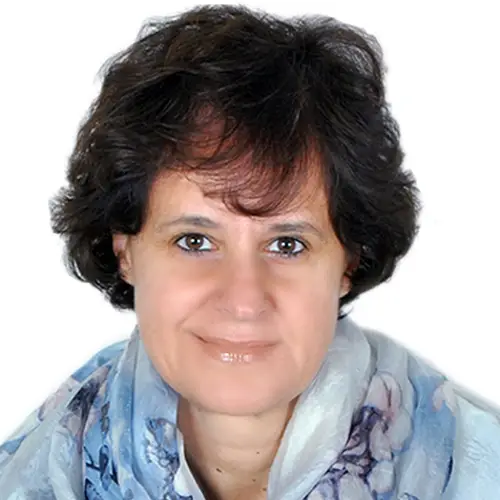
Dr. Raffaela Puggioni is Full Professor at the School of International Affairs and Executive Director of the Centre for European Studies. She has sixteen years of teaching experience in International Studies/Political Science in countries as diverse as Italy, China, Azerbaijan and India. Between 2021-2023, she has awarded two-year Marie-Curie Individual Fellowship—carried out at LUISS University (Rome)—where she investigated the relation between COVID-19 emergency, (im)mobility and the liberal subject. Her work is broadly situated in the disciplines of International Relations Theory, Political Theory, Resistance Studies and Border Studies, with a geographical focus on EUrope. Her work has appeared in the Journal of Refugee Studies, Political Studies, Citizenship Studies, Third World Quarterly, Global Society, Journal of Borderlands Studies, Politics, Thesis Eleven, Open Research Europe, Philosophies and a monograph, Rethinking International Protection, was published by Palgrave in 2016.

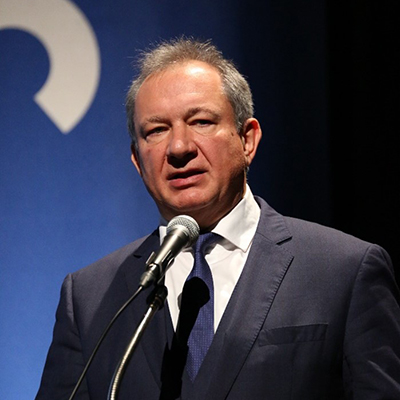
Prof. Vesselin Popovski is the Founding Executive Director of Centre for UN Studies and the Vice Dean of Jindal Global Law School. In 2004-2014 Senior Academic Officer, Head of ‘Peace and Governance’ Programme at UNU, Tokyo. Prior to that Co-Director of EU project ‘Legal Protection of Individual Rights in Russia’ and Assistant Professor, Exeter University, UK. Ph.D. King’s College London; M.Sc. London School of Economics; B.A./M.A. Moscow Institute of International Affairs. Over twenty books, among them Re-Imagination of International Legal Order (2023); Fulfilling the SDGs (2021); Global Approaches to Peace (2019); Implementation of Paris Agreement on Climate Change (2018); Emotions in International Politics (2016); Security Council as Global Legislator (2014); International Rule of Law and Professional Ethics (2014); Legality and Legitimacy in Global Affairs (2012); World Religions and Norms of War (2009); International Criminal Accountability and Child Rights (2006). Co-writer of ‘Declaration on the Right to International Solidarity’ (2021); ‘Responsibility to Protect’ ICISS Report (2001); ‘Princeton Principles of Universal Jurisdiction’ (2000). Bulgarian Ex-Diplomat.

Dr. Oleksandr Svitych is Associate Professor at the School of International Affairs and a founding member of the JSIA Center for Political Economy and Philosophy. Dr. Svitych is a political economist with interests in political and economic sociology, political philosophy, and critical social theory. His main research orientation is the relationship between markets and social stability in the context of the current international economic order. Additionally, he is interested in martial arts studies. Dr. Svitych is the author of The Rise of the Capital-state and Neo-nationalism: A New Polanyian Moment published by Brill’s Global Populisms series. His research has also appeared in such outlets as Globalizations, Journal of Human Development and Capabilities, Review of International Political Economy, and The International Journal of the History of Sport, among others. Dr. Svitych is a proponent of radical and engaged pedagogy.

Dr. Silvia Bottega, a political scientist with a PhD from the University of Turin, is currently serving as an Associate Professor at JSIA. Her research interests encompass regional security architectures in Africa, Asia, and Europe, as well as the impact of wars and asymmetric conflicts on women and the general population, the ethics of refugee protection in the Middle East and in Europe. She has taught a wide range of courses including Foreign Policy Analysis, Military Alliances and Defence Diplomacy, International Relations Theory, and International Public Law. She is also teaching M.A. in International Relations, Security and Strategy programme offered through Coursera. In addition to her teaching responsibilities, Dr. Bottega has also been actively involved in international collaborations, coordinating Summer and Winter Schools and contributing/leading to the establishment of Study Abroad programmes at JSIA.

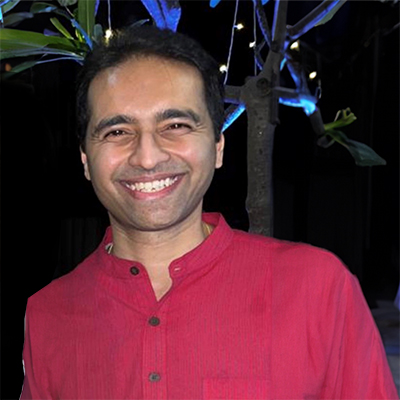
Prof. Dr. Rajeev Kadambi is Professor at JSIA. After obtaining his Ph.D. from Brown University (U.S.A.), he has been with O.P. Jindal Global University where he teaches political theory/political philosophy from a comparative philosophical and ethical perspective. His research attempts to theorize human experience from its culturality. Rajeev is currently finishing his manuscript on M.K. Gandhi’s ethical thought, which examines Gandhi’s reconstruction of traditions as forms of action and knowledge.
What does it mean to protect EU borders? How does, and should, the EU deal with unauthorised border-crossers? Who are the (post-colonial) ‘border-crossers’ against whom the EU is erecting physical, legal, and social barriers? Does the EU have any political, legal and ethical, responsibility for the border deaths along the Mediterranean maritime borders? These are some of the key questions that the Jean Monnet Chair will focus its attention. This will be done by combining a political and ethical perspective, which will investigate and question not just how borders are managed and made secure but also what role, if any, solidarity, humanitarianism, and responsibility play in border management.
The RADAR project will be implemented through teaching, research, and outreach activities, which will all stimulate high-profile debates, academic engagement, and cross-cultural exchange inside and outside of academia. European research on borders will be deepened and broadened by looking at border management, EU dialogue on border security as well as the ethical and legal questions that search and rescue operations involve. Border issues — and the connected themes on migration, asylum, citizenship, identity, and inclusion — will be approached from an interdisciplinary perspective, that combines the fields of International Relations Theory, Migration and Border Studies, Anthropology, Political Philosophy and International Law.
The teaching activities, so far, organised can be divided into three types:
| 1 | European Union: History and Politics (Spring Semester 2024; Spring 2006) This course has offered students an overview of the historical trajectory of the European integration process as well as in-depth discussion of selected EU polices including the single market and the monetary policy, migration and security, EU enlargement, and European neighbourhood policy. |
| 2 | Contesting EU Borders: Solidarity, Activism, and Citizenship (Spring Semester 2024) This course offered a critical analyse of the way in which European borders have been challenged, contested and transgressed in response to the many barriers, fences, frontiers that EU countries have erected during the past two decades. Attention will be mostly on the acts of resistance, solidarity and humanitarianism that border-people and migrants networks have enacted. |
| 3 | Debating Migration in Europe (Fall semester 2024; Spring 2026) This course has been designed in such a way of making students debate migration issues — by looking at questions of identity, integration, national protections, citizenship and solidarity. The ultimate aim of the course was to stimulate reflection also to current debate in India on citizenship following the 2019 Constitutional Amendment. |
| 5 | European Borders: Migration, Border-death and Humanitarian crises (Spring 2025) This course critically analysed European borders by combining theory and practice, that is how security shapes and govern border policies and how migrants, NGOs, local people and the court count dominant security approach, and transform EU borders also into a humanitarian (border)space. |
| 5 | Border (in)security (Spring 2025) The aim of the course is to critically discuss European borders and the meaning of (in)security. Whose life do states make secure? How do state protect their borders? Against which threats? While the first part focusses traditional International Relations (IR) concepts—such as order, sovereignty and (in)security—the second part devotes attention to border (counter-)practices. LAST SENTENCE By investigating border (in)security, this course has engaged |
| 6 | EU Security Debates (Fall 2025) The aim of the course is to focus on current security debates in the European Union (EU). Rather than focussing exclusively at EU narratives, special attention will be devoted to the way in which EU security debates are read, observed, narrated and commented in Indian media. |
Dr. Oleksandr Svitych has dedicated 30 hours (15 hours in Fall 2024 and 15 hours in Spring 2025) as part of his (elective) course on “ Populism, Nationalism and Cosmopolitanism in the 21st century”—engaging a total of 106 students. The following topics/issues have been taught/discussed:
During class presentations, some 14 students—in five different presentations—have specifically focused on Europe/EU: Giorgia Meloni and Brothers of Italy; Marine le Pen and National Rally; Volodymyr Zelensky and Servant of the People; Benito Mussolini and National Fascist Party; and Adolf Hitler and the Nazi Party.
Dr. Silvia Bottega has dedicated 24 hours (Spring 2024) as part of her two (cross-elective) courses: “Mediterranean Politics” and “Europe in the Indo-Pacific —engaging a total of 36 students. Brief courses overview:
Prof. Dr. Rajeev Kadambi has dedicated 174 hours (54 hours during Spring 2024 and 2025, and 66 hours during Fall 2024) as part of his (core) courses on “Political Philosophy II ”, “Political Philosophy I”—engaging a total of 148 students. Brief courses overview:
Protecting Borders or Protecting People?
(coordinated and delivered by prof. Vesselin Popovski) – 5 sessions of two hours each.
A very short overview:The norm ‘Responsibility to Protect (R2P)’—adopted by the United Nations in 2005—has been a shift in the way of thinking about humanitarian intervention. It focuses less on the national interests of states, intervening on humanitarian ground, rather on the vital interests of populations, exposed to mass atrocities and humanitarian crises. The Series will discuss the following questions: Is R2P a norm, or is it a principle? Does R2P aim at protecting states’ borders or people? What does it mean to protect EU borders? How does, and how should, the EU deal with unauthorized border-crossing? What is the role of solidarity, humanitarianism, and responsibility in border security? What are the EU political, legal and ethical responsibilities for the victims of forced migration?
EU borders: visual narratives
(coordinated and delivered by prof. Raffaela Puggioni) – 3 sessions of two hours each
A very short overview: borders are often seen simply as geographical lines that separates sovereign states. But territorial lines are more than this: they shape identity, cohesion, sense of belonging but also difference and conflict. Borders are not exclusively physical. They are also social, legal and cultural. In this series, we explored (European) borders through visual images. The aim is to make images to speak and tell the stories of those who crossed them.
International Solidarity
(coordinated and delivered by prof. Vesselin Popovski) – 6 sessions of two hours each.
RADAR’s research deepens and broadens the study of European borders by examining border management, EU dialogue on border security, and the ethical and legal questions raised by search-and-rescue operations. It approaches migration, asylum, citizenship, identity, and inclusion from an interdisciplinary standpoint, drawing on International Relations Theory, Migration and Border Studies, Political Philosophy, and International Law.
Special attention will be devoted to border ethical perspective. This is done by asking — with particular urgency since the war in Ukraine — which ethical commitments EU institutions and member states actually apply, to whom, and with what consequences for the EU’s credibility both inside and outside Europe. Empirically, this means tracking the official debate within EU institutions; theoretically, it means testing whether border security might be approached ethically, not simply by investigating how NGOs and local communities are involved along the borders but also how EU values and principles shape accountability and responsibility.
A variety of events — including discussions, workshops and outreach activities — will be organised by the team members (individually and as a team) through the following research centres: Centre for European Studies, Centre for Migration and Mobility Studies, the Centre for Political Economy and Philosophy as well as The Centre for UN Studies.